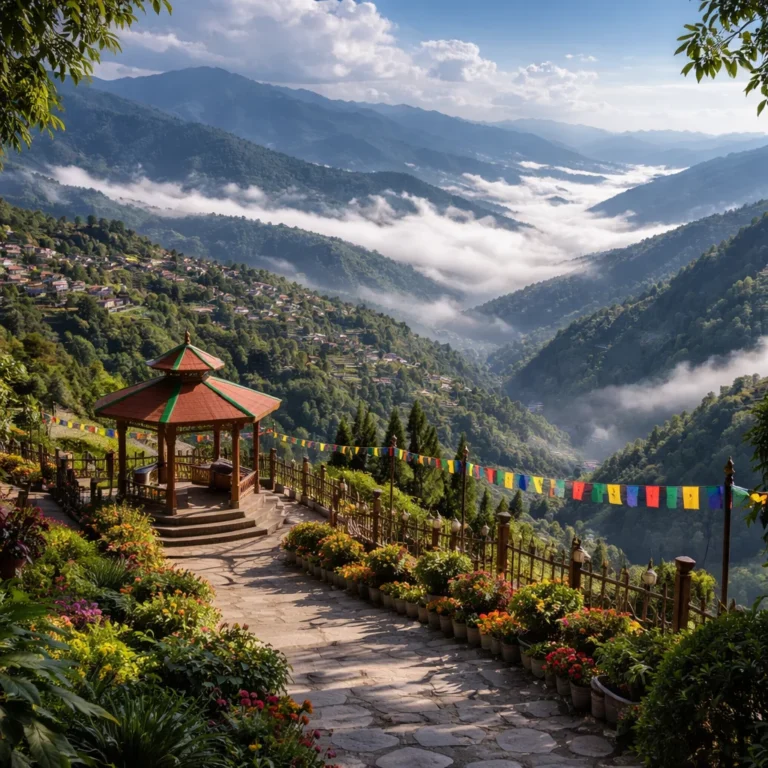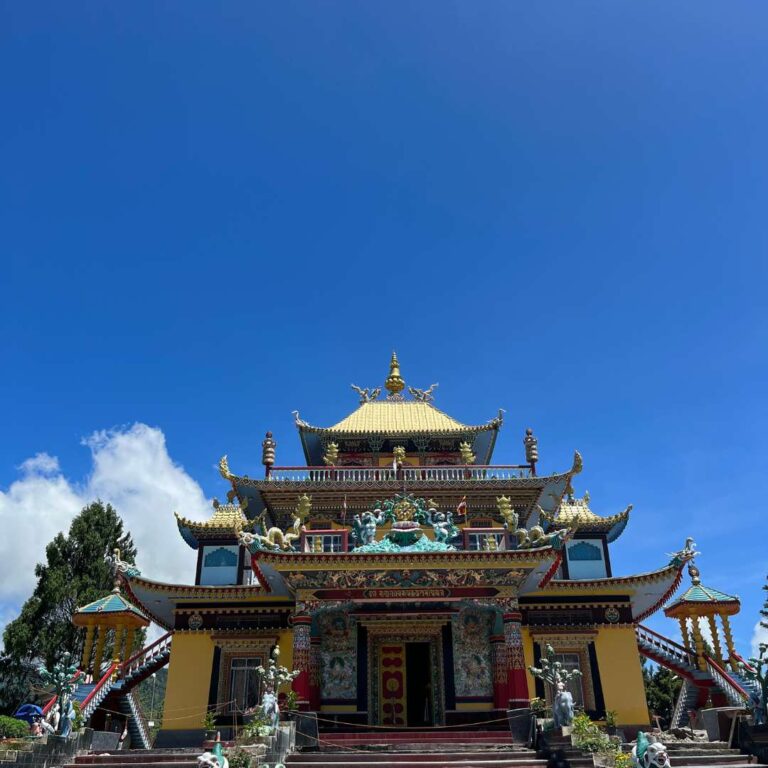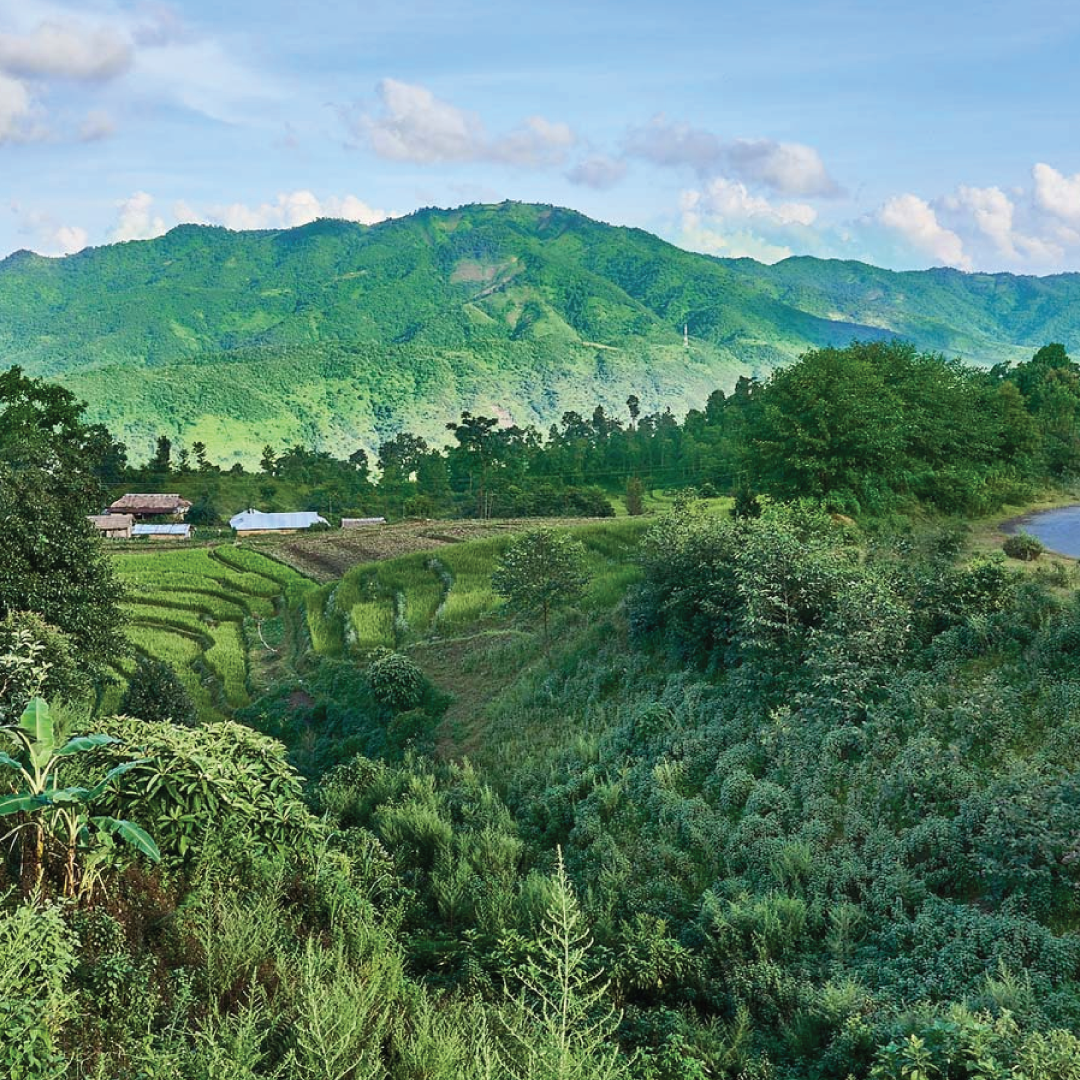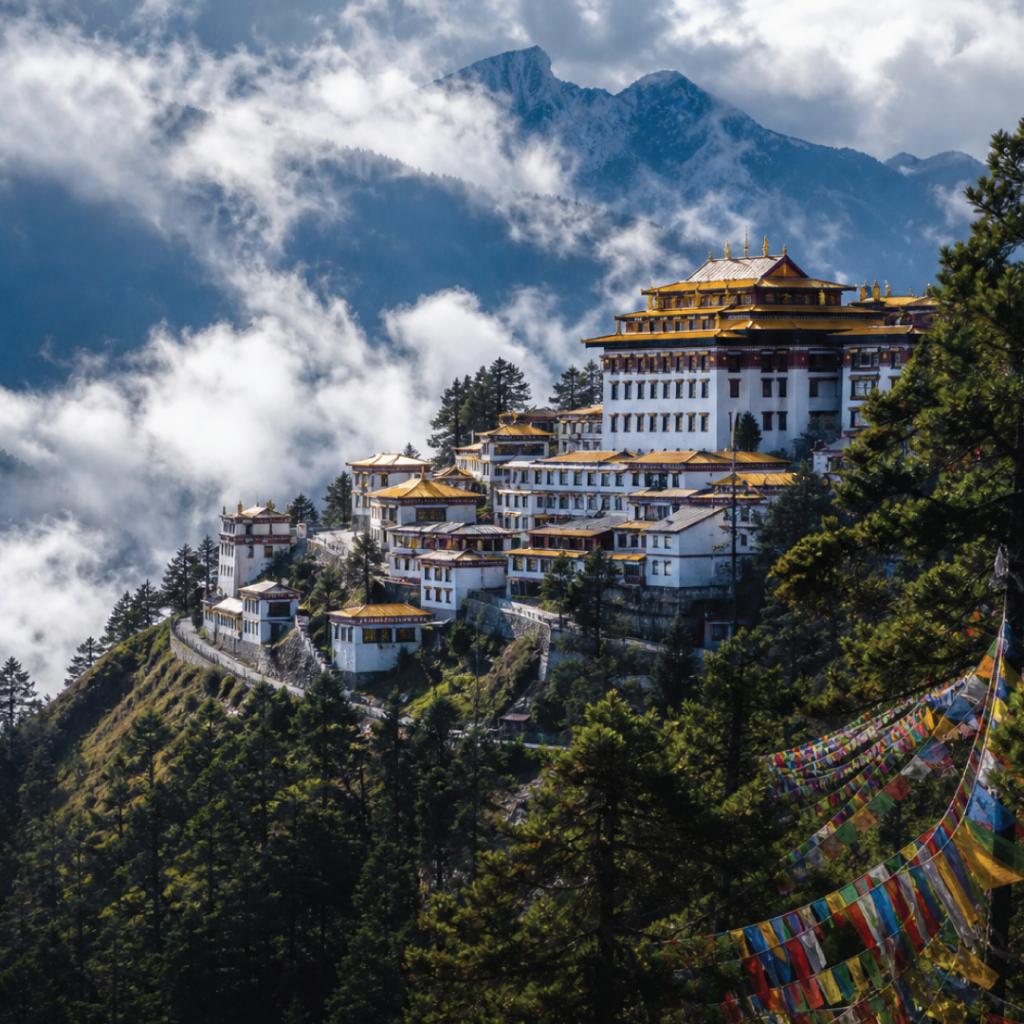
Begin your Bhutan journey by arriving at Phuentsholing, the gateway town bordering India, where you will complete immigration and permit formalities. From there, embark on a scenic 5 to 6-hour drive to Thimphu, Bhutan’s capital, ascending from subtropical lowlands into the Himalayan hills. Along the way, you may choose to stop at Kharbandi Gompa for panoramic views and a peaceful introduction to Bhutanese spirituality. Once in Thimphu, check into your hotel and take a relaxing evening stroll around the city center, exploring local handicraft shops and the bustling weekend market if time permits, followed by dinner at a traditional Bhutanese restaurant.
On the second day, explore Thimphu’s cultural and spiritual highlights, starting with the impressive 51-meter tall Buddha Dordenma statue overlooking the valley and the Memorial Chorten where locals engage in prayer rituals. Visit the magnificent Tashichho Dzong, which houses the king’s offices and monastic body, then continue to the Institute for Zorig Chusum to witness traditional Bhutanese arts and crafts in action. The Folk Heritage Museum offers interactive exhibits showcasing rural life, and you can also visit Changangkha Lhakhang temple and the National Textile Museum, where you can learn about Bhutanese weaving and even try on traditional attire. Spend your evening unwinding at Clock Tower Square or sampling local pastries at a cozy café, with optional activities such as a nighttime riverside walk or enjoying Bhutanese karaoke.
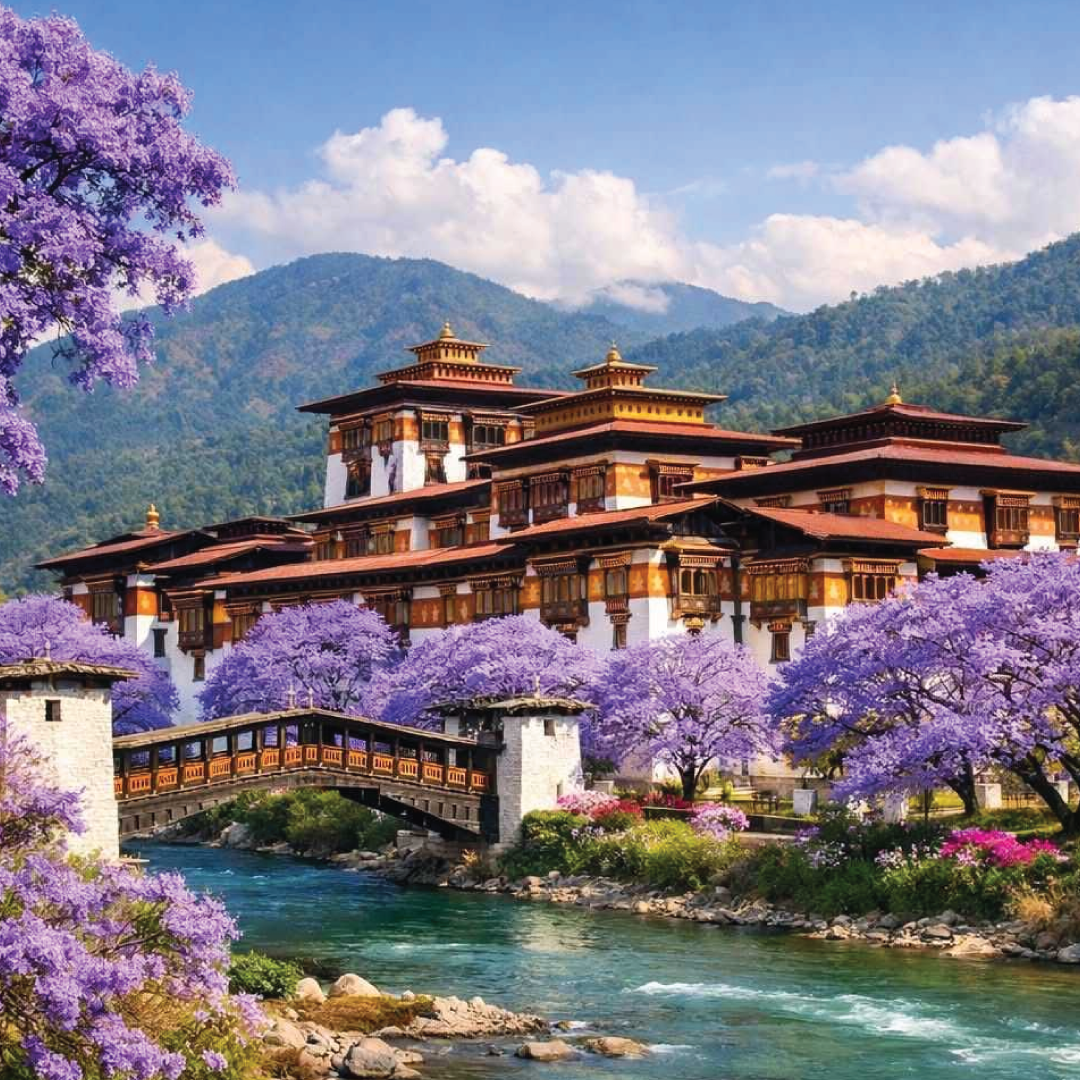
Depart Thimphu on day three, heading for Punakha via the scenic Dochula Pass at 3,100 meters. Here, admire the 108 Druk Wangyal Chortens and, if the weather is clear, spectacular views of snow-capped Himalayan peaks, while enjoying hot tea at a mountaintop café. Descend into the lush Punakha Valley and visit the stunning Punakha Dzong, strategically positioned at the confluence of two rivers and renowned for its intricate murals. Later, stroll across the longest suspension bridge in Bhutan, taking in dramatic views of the river below, and explore the riverside villages or surrounding paddy fields. Relax in the evening at your resort, and consider trying the traditional hot stone bath therapy, a unique Bhutanese wellness experience.
On day four, take a morning walk through rice paddies to Chimi Lhakhang, the Fertility Temple dedicated to Drukpa Kunley, known as the Divine Madman for his unorthodox methods. After your visit, drive approximately four hours to Paro Valley, stopping for lunch at local cafés notable for Bhutanese dishes such as Ema Datshi. Upon arrival, settle into your hotel and visit Paro Rinpung Dzong, an imposing fortress-monastery with beautiful courtyards and river views, followed by a stroll through Paro’s old market and crossing its traditional wooden cantilever bridge. In the evening, indulge in local tea or Bhutanese momos at various cafés, with the option to attend an archery or cultural event if available.
Day five is dedicated to the iconic hike to Tiger’s Nest Monastery, perched dramatically 900 meters above Paro Valley. Begin early with breakfast before undertaking the moderate but steep 4-5 hour round-trip trail through forests and prayer-flag adorned paths. Once at the monastery, enjoy the breathtaking vistas and visit inside the sacred complex, though photography is restricted. Return to Paro for lunch and visit the National Museum housed in Ta Dzong, where you can explore Bhutan’s history and wildlife exhibits. Use any remaining time for souvenir shopping, perhaps picking up hand-woven textiles or local herbal teas. In the evening, consider a meditative session at a monastery or a traditional meal with a Bhutanese family for an authentic cultural experience.
On your final day, if time allows, visit Kyichu Lhakhang, one of Bhutan’s oldest and most revered temples, and take a last walk around Paro town for any final shopping. Depending on your travel plans, you will then transfer either to Paro Airport for your onward flight or drive back to Phuentsholing for border crossing into India. Throughout the trip, be mindful of Bhutanese customs such as dressing modestly when visiting religious sites and requesting permission before photographing monks or temple interiors. This carefully paced itinerary combines Bhutan’s natural beauty, rich spirituality, and vibrant culture to offer an immersive and memorable Himalayan journey.